For Northeast Florida homes, a gas fireplace maintenance checklist means a few homeowner checks before the first cool front: fresh remote batteries, a clear outdoor vent cap, clean glass with a sound gasket, correctly placed logs and a tested carbon monoxide (CO) alarm. Add a yearly professional inspection of burners, pilot and venting. Electric fireplaces need only dusting, clear vents and a power check.
Key takeaways
- Insects are a common Florida nuisance: webs and nests can collect in idle pilots, burner openings and vent caps.
- A dusty first-fire smell is normal. A rotten-egg smell means leave and call from outside.
- Book professional service yearly, as the Hearth, Patio & Barbecue Association, the U.S. Consumer Product Safety Commission and NFPA 211 advise.
- Never relight a fireplace that sat in floodwater until a technician inspects it.
- Electric fireplaces need little more than dusting, clear vents and a wall outlet.
In this guide
- When should Florida homeowners run a fireplace checklist?
- Your gas fireplace maintenance checklist: 6 homeowner checks
- Spiders, wasps and a pilot that won’t stay lit
- First-fire smell or gas leak? What’s normal and what’s an emergency
- How to clean gas fireplace glass without damaging it
- Electric fireplace maintenance: simple, but not zero
- Gas fireplace troubleshooting table: DIY fix or call a pro?
- After a hurricane or flood: don’t relight until it’s checked
- How often should a gas fireplace be serviced, and what’s included?
- Frequently asked questions
When should Florida homeowners run a fireplace checklist?
Most Northeast Florida gas fireplaces sit unused from spring until the first cool front, and then everyone tries to light theirs the same weekend. Run the checklist, and book your annual service, in September or October instead.
Idle months are hard on fireplaces here: humidity and dust settle on burners, insects move into pilots and vent caps, salt air works on outdoor vents, and storms can damage or flood equipment.
Your gas fireplace maintenance checklist: 6 homeowner checks
Do steps 1 to 5 with the fireplace off and cool; step 6 is your first fire.
- Test your carbon monoxide alarm monthly; new batteries yearly.
- Replace remote and receiver batteries at least once a year.
- Clear the outside vent cap of plants, nests and storm debris.
- Inspect the glass and gasket for cracks, chips or fraying.
- Check log and media placement against the manual’s diagram.
- Watch the first light: a steady blue pilot and no soot.
Test your CO alarm (and know Florida’s rule)
The U.S. Consumer Product Safety Commission (CPSC) recommends CO alarms on each level of the home and outside sleeping areas, tested monthly, with batteries replaced yearly.

Florida Statutes s. 553.885 also requires a CO alarm within 10 feet of each sleeping room in homes and additions permitted for new construction on or after July 1, 2008 that have a fireplace, a fuel-burning appliance or an attached garage. Older homes are generally not covered, but the risk is the same.
Replace remote and receiver batteries
Turn off the gas and let the unit cool before opening the receiver compartment. Weak batteries can keep a fireplace from responding in the fall.
Clear the outside vent cap
On a direct-vent fireplace (a sealed unit that draws combustion air from outdoors and exhausts through the same vent cap), find the cap outside. Trim back shrubs and vines, clear nests and storm debris, keep grills and stored items away, and never cover or paint it.
The Hearth, Patio & Barbecue Association (HPBA) tells homeowners to keep vents unobstructed. Required clearances come from your installation manual, so ask us if landscaping has grown in.
Inspect the glass and gasket
Look for cracks, chips, a loose frame or a frayed, flattened gasket. Never run a sealed fireplace with cracked or missing glass.
Check log, ember and media placement
Set logs exactly as the manual’s diagram shows; misplaced logs cause soot and poor burning. Wear gloves, add no extra embers or media, and stop using the set and call for service if soot appears. That goes for all gas log sets and inserts.
Watch the first light
The pilot should burn steady and blue. A yellow, flickering pilot, tall lazy flames or soot send you to the troubleshooting table below.
Spiders, wasps and a pilot that won’t stay lit
In our experience, insects love pilot assemblies in Florida. Over six to eight idle months, spider webs and insect nests can partly block a pilot, burner ports, air openings or the outdoor vent cap.
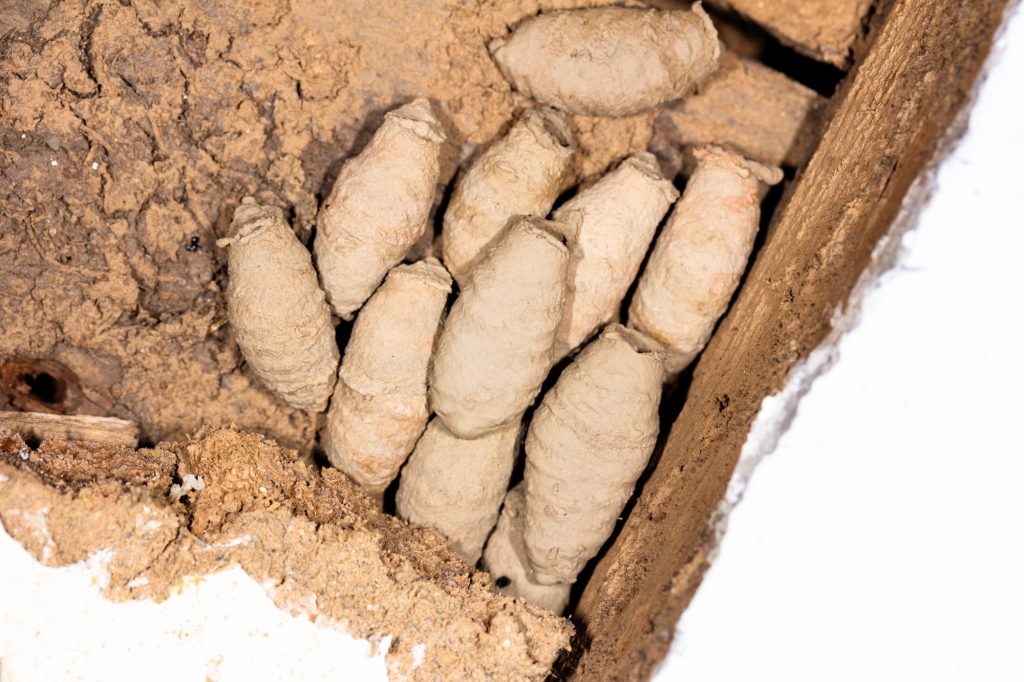
The result: a pilot that won’t light or stay lit, a lazy flame, delayed ignition or soot.
What you can safely do yourself
With the unit off and cool, check for webs with a flashlight. If your manual allows, brush or vacuum loose dust from the firebox and logs, keeping it out of the burner slots.
Never poke a pilot or burner orifice with wire. Pilot and burner cleaning belongs to the annual service.
Gas fireplace pilot won’t stay lit: what to check first
Confirm the gas valve is open, the propane tank has fuel and ignition batteries are fresh, then follow the manual’s lighting steps exactly. If the tank ran empty, don’t just refill and relight: the Propane Education & Research Council says a qualified professional must inspect the system first, so call your propane supplier.
If the pilot lights but drops out, suspect the thermocouple or thermopile, a small heat sensor in the pilot flame that holds the gas valve open. If it is dirty or weak, the valve shuts and the pilot goes out.
Stop after a couple of tries and call a pro. If you smell gas at any point, follow the steps in the next section.
First-fire smell or gas leak? What’s normal and what’s an emergency
The normal burn-off smell
The first fire after months idle often brings a brief dusty smell as dust and pet hair burn off. Open a window, and it should fade. New fireplaces also have a paint-curing break-in, and Dimplex says a slight odor on first use is normal for its electric units too.
A smell that lingers or grows stronger is not normal: turn the fireplace off and call for service. If anyone has a headache, dizziness or nausea, treat it as possible carbon monoxide poisoning: CPSC says to get everyone outside to fresh air right away and call 911 or the fire department from outside.
If you smell rotten eggs
The Florida Public Service Commission (PSC) explains that natural gas is odorless, so an odorant, commonly ethyl mercaptan, is added to give leaks a rotten-egg smell.
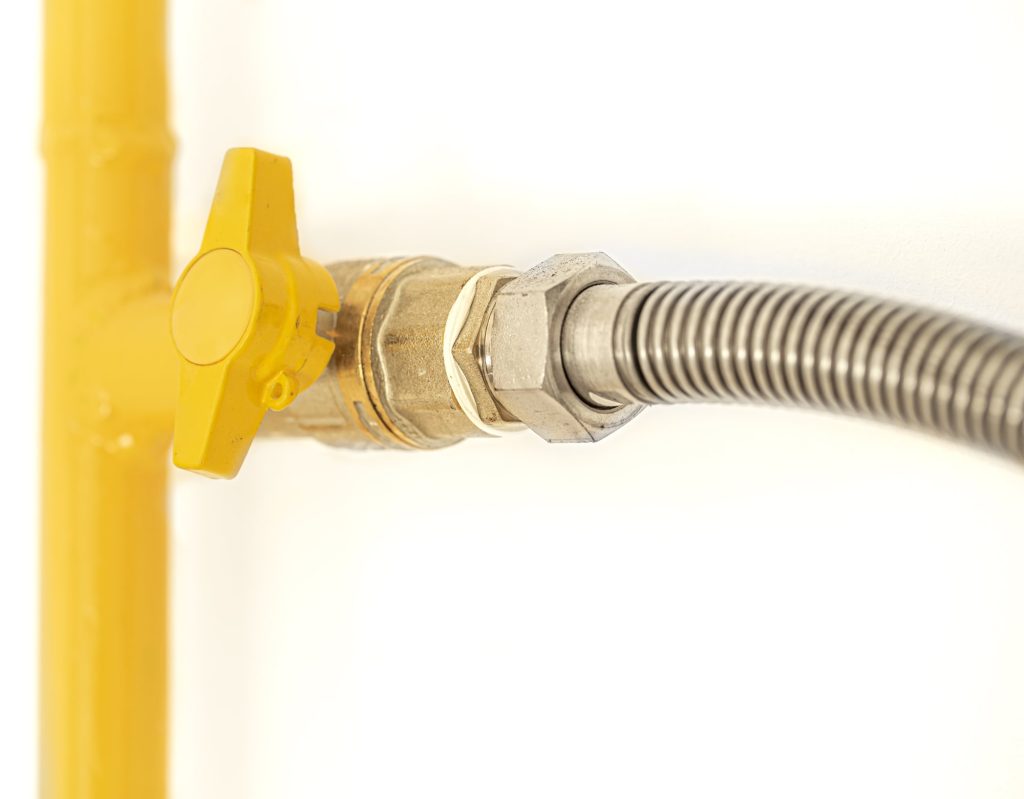
Smell gas? Leave first, call second
Leave immediately with everyone. Do not light a match, flip switches or use a phone inside, the PSC advises; call the gas company or 911 from outside. On propane, an N.C. Department of Agriculture safety sheet adds: close the tank valve only if it is safe, call from a neighbor’s home and stay out until cleared.
If your CO alarm sounds
CPSC says never ignore it or hunt for the source. Get everyone outside, call 911 or the fire department, and stay out until responders say it is safe. Early CO poisoning feels like flu without a fever.
How to clean gas fireplace glass without damaging it
Combustion leaves a white mineral film on the glass. Valor says to clean it promptly, because film left too long can etch the glass.
- Turn off the fireplace and pilot, and let the glass cool completely.
- Remove the glass as the manual shows and lay it on a towel.
- Use your manufacturer’s approved cleaner. Valor recommends an emulsion-type cleaner, never Windex or ammonia-based cleaners.
- Apply with a soft damp cloth and dry with soft cotton; Valor says most paper towels and synthetics are abrasive to ceramic glass.
- Check the gasket, reinstall the glass so it seals evenly, and wipe off fingerprints.
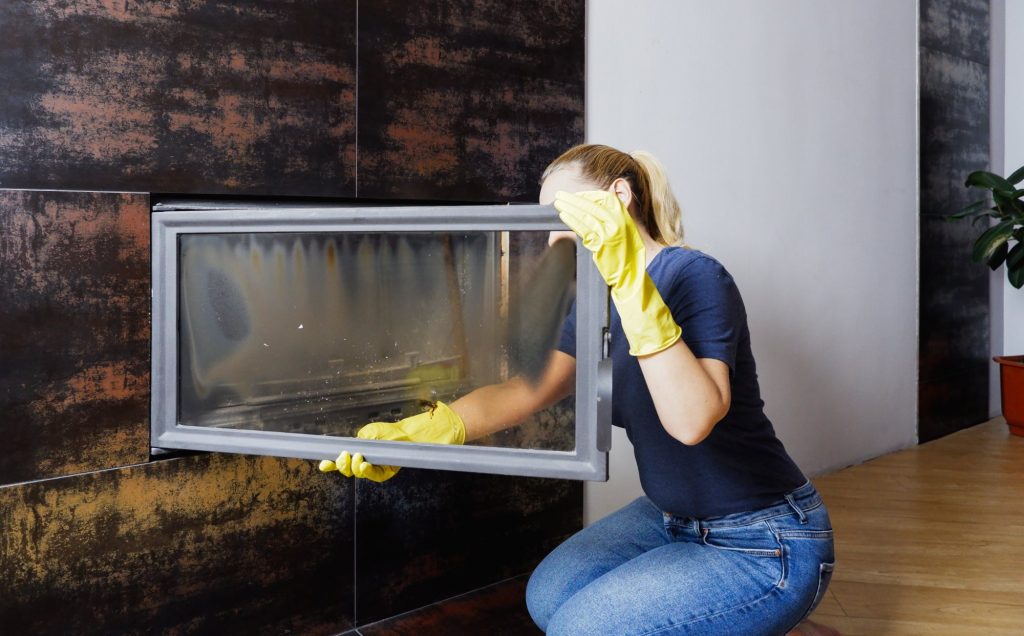
Avoid razors and abrasive pads, and never run the fireplace with a cracked panel. Etched glass? Ask us about the right replacement.
Electric fireplace maintenance: simple, but not zero
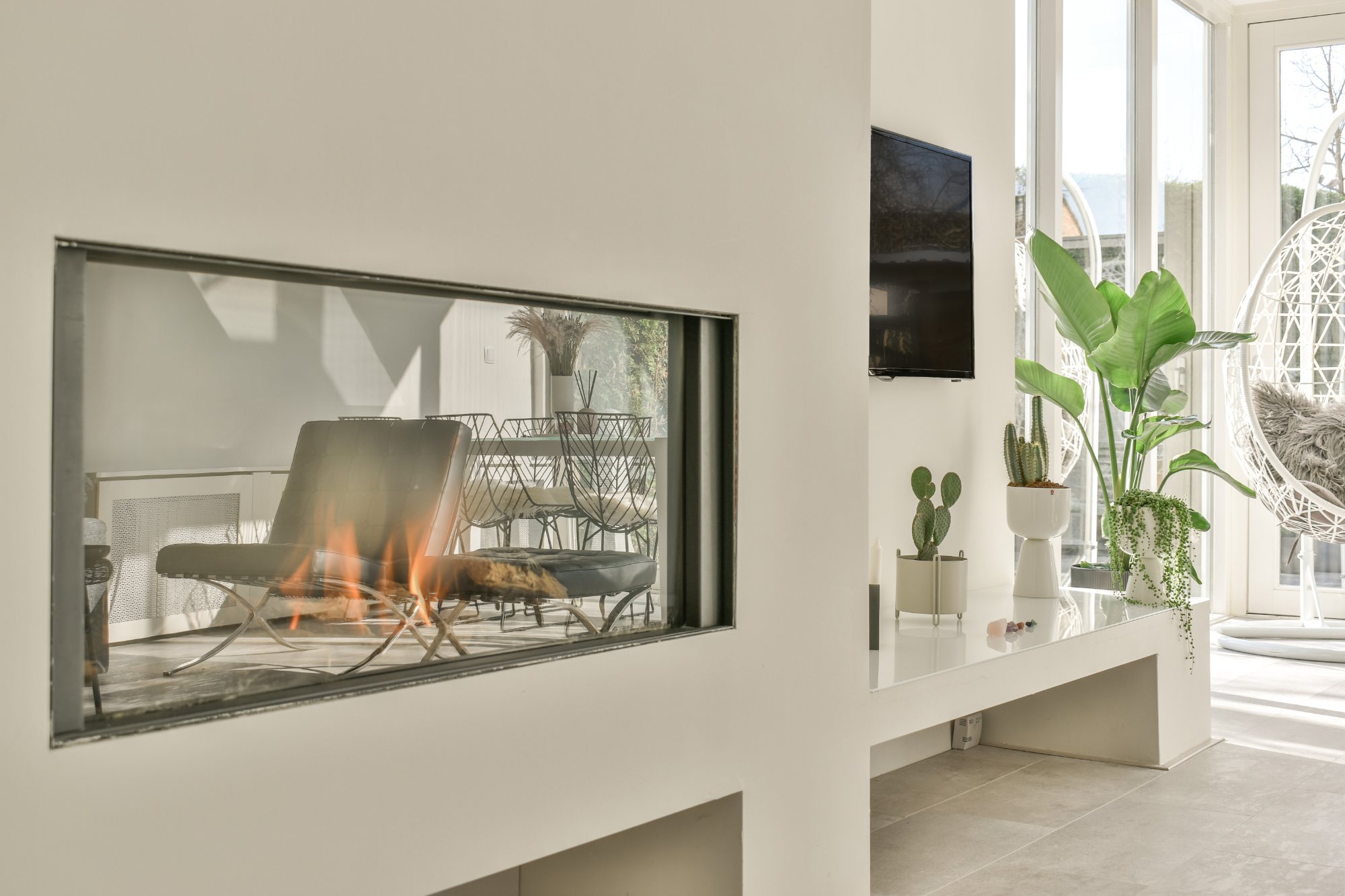
Electric fireplaces are the easiest to own: no gas line, venting or pilot, and no fuel to burn. That simplicity is a big reason they lead our lineup.
Jobs in our installation gallery include a Dimplex Evolve, a 74-inch Dimplex Ignite Evolve feature wall and a Valor electric fireplace in St. Augustine.
Dust, vents and the heater intake
Dimplex‘s maintenance FAQ keeps the list short: with the unit off and unplugged, vacuum the vents with a brush attachment, never spray liquid inside, check the intake and fan vents for buildup, and inspect the unit every few months.

Glass, flames and heat
Wipe the glass with a soft dry cloth or non-abrasive cleaner. Flame looks dim? Check the remote’s brightness and flame settings, then the LEDs and connections.
Heater blowing cold? Check the heat setting and thermostat and clear the intake. If it persists, the blower may be blocked or the element faulty.
Outlets, circuits and water-vapor models
Plug directly into a wall outlet, never an extension cord or power strip. Built-in or high-wattage models may need a dedicated circuit, a job for a licensed electrician. Water-vapor models add a water reservoir: follow the manual’s water and cleaning instructions.
Switching from gas? Compare electric vs. gas vs. wood fireplaces for a Florida home.
Gas fireplace troubleshooting table: DIY fix or call a pro?
The last column says who should handle it: DIY, Pro or Emergency. The bottom three rows are electric.
| Symptom | Likely cause | What to do |
|---|---|---|
| Remote does nothing | Dead batteries; receiver off | DIY: new batteries, re-pair. Pro if still dead. |
| Pilot will not light | Closed valve, empty propane tank, webs in the pilot | DIY: check the valve and tank gauge. Empty tank: your propane supplier inspects before relighting. Pro: pilot cleaning. |
| Pilot lights, then goes out | Weak thermocouple or thermopile, dirty pilot, drafts | Pro. |
| Delayed ignition or a “whoomp” | Blocked burner ports, insects, misplaced logs | Pro. Stop using it until checked. |
| Tall yellow flames or soot | Logs out of place, blocked air or venting | Pro. Stop using it. |
| White haze on the glass | Normal combustion film | DIY: clean cool glass with an approved cleaner. |
| Rotten-egg smell | Possible gas leak | Emergency: leave, then call 911 from outside. |
| CO alarm sounds | Carbon monoxide | Emergency: get out, call 911. |
| Electric: flames but no heat | Heat setting, thermostat, blocked intake, blower | DIY: check settings, vacuum vents. Pro if it persists. |
| Electric: no flame effect | Brightness setting, LED, loose connection | DIY: check settings. Pro for parts. |
| Electric: breaker trips | Shared circuit, extension cord | DIY: use a wall outlet. Electrician for a new circuit. |

Rule of thumb: the gas valve, pilot assembly, thermocouple, burner orifices, venting and gas piping are technician work; the PSC says a qualified professional should install and repair gas appliances.
After a hurricane or flood: don’t relight until it’s checked
Before a storm
Know where your gas meter or propane tank and the fireplace’s shutoff valve are. Photograph the rating plate and save the manual as a PDF to speed up service.
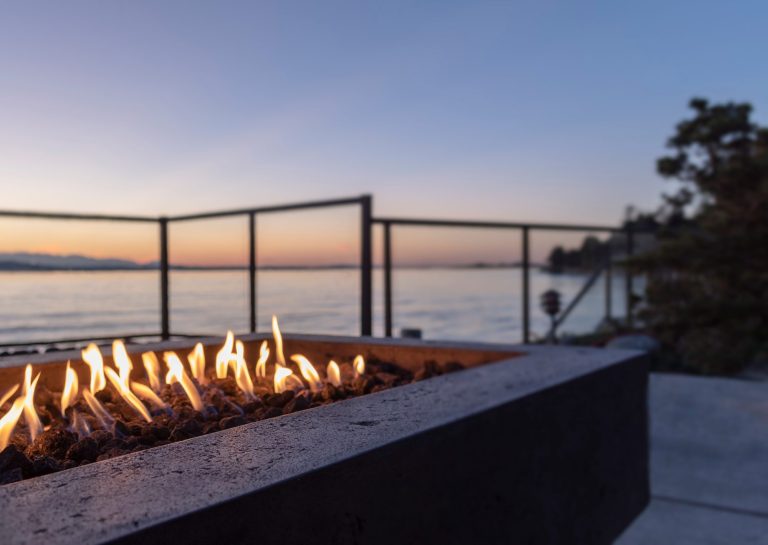
Cover or secure outdoor fireplaces and fire pits and fire tables on your patio or lanai as their manuals direct.
After high winds
Before the first fire, check the vent cap and, from the ground, any roof termination for dents, displacement or debris; don’t climb onto the roof. The Chimney Safety Institute of America notes that nests and debris can block gas appliance flues. Bent or loose venting means calling a technician, not relighting.
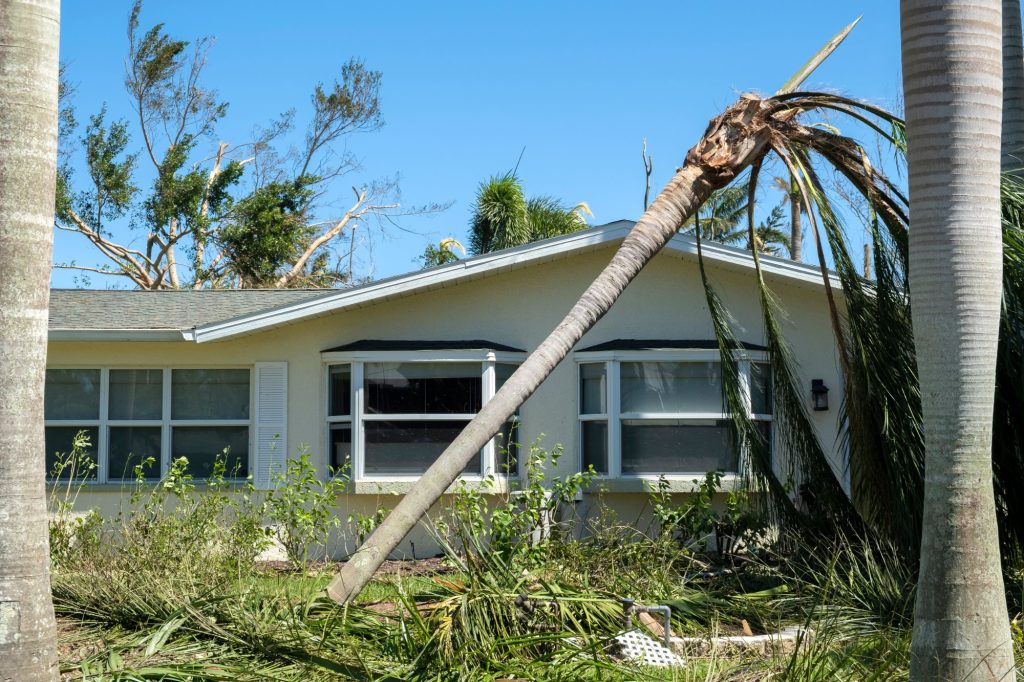
If floodwater reached your fireplace
Flooded fireplace? Leave it off
CPSC warns that gas control valves that have been under water must be replaced, not salvaged, so have a qualified technician inspect any flooded gas fireplace before it is used. On propane, the N.C. safety sheet says to leave the gas off until a technician inspects and leak-tests the system.
Keep a wet electric fireplace unplugged until it is checked; CPSC says breakers, GFCIs and fuses that were under water should be replaced too.
How often should a gas fireplace be serviced, and what’s included?
Once a year, even if you barely use it. HPBA recommends an annual technician check of the gas lines, burner, control compartment and fan, and CPSC advises yearly professional service of heating systems. NFPA 211, the National Fire Protection Association standard for chimneys, fireplaces and vents, calls for yearly inspection.
What our annual service covers
Our annual fireplace service includes:
- Checking and cleaning burners, pilots and igniters
- Inspecting venting and glass gaskets
- Confirming everything lights and runs safely
- Troubleshooting ignition and pilot problems
- Parts for the brands we carry, like Valor and Empire
Salt air slowly corrodes vent caps and outdoor units, like the outdoor linear gas fireplace we installed during new construction, so include them in every annual inspection.
When to book in Northeast Florida
Early fall, before the first cool front. Family-run since 1997, our team handles annual fireplace service from our Palm Coast showroom across Flagler, Volusia and St. Johns Counties: call 386-446-5131 or schedule your pre-season service.
Frequently asked questions
How often should a gas fireplace be serviced?
Once a year by a qualified technician, even if you rarely use it. The Hearth, Patio & Barbecue Association recommends an annual technician check, and NFPA 211 calls for yearly inspection of fireplaces and vents. In Northeast Florida, book in September or October, before the first cool front.
Why won’t my gas fireplace pilot stay lit?
Usually a dirty or weak thermocouple or thermopile, a pilot partly blocked by dust or spider webs, drafts or low gas supply. Check that the gas valve is open and the batteries are fresh. If the propane tank ran empty, have your supplier inspect the system before relighting. If it still drops out, or you smell gas, call a technician.
Is it normal for a gas fireplace to smell when first turned on?
A brief dusty smell on the season’s first fire is usually dust and pet hair burning off, and it should fade with a window open. New fireplaces also have a paint-curing break-in. A rotten-egg smell is different: leave, do not touch switches, and call 911 or the gas company from outside.
Why does my gas fireplace have yellow flames or soot?
Tall, lazy yellow flames or soot on the glass or logs usually mean the logs are out of position or the air openings or venting are partly blocked, sometimes by dust or insect nests. Stop using the fireplace and call for service. A healthy pilot burns steady and blue.
Do electric fireplaces need maintenance?
Very little: dust the exterior, vacuum the intake and fan vents with the power off, and wipe the glass with a soft dry cloth. Dimplex says never to spray liquid inside or use an extension cord. There is no gas, venting or pilot to service.
Do I need a carbon monoxide detector with a gas fireplace in Florida?
Florida Statutes s. 553.885 requires a CO alarm within 10 feet of each sleeping room in homes and additions permitted for new construction on or after July 1, 2008 that have a fuel-burning appliance, a fireplace or an attached garage. Older homes are generally not covered, but CPSC recommends alarms on every level and outside sleeping areas.
Should I turn off my gas fireplace pilot light for the summer?
It depends on your ignition type and manual. Standing pilots burn continuously, and some manufacturers suggest turning them off in warm months to save gas. In Florida an idle pilot can collect spider webs over the summer, so plan a pre-season inspection and follow the manual’s lighting steps exactly when you relight it.
Plan it with a local pro
Book your pre-season fireplace service, or visit our showroom at 4982 Palm Coast Pkwy NW, Suite 7, in Palm Coast (Monday to Saturday, 9 to 5) to talk through gas and electric options. We sell, install and service fireplaces across Flagler, Volusia and St. Johns Counties.
Sources
- The 2026 Florida Statutes, s. 553.885: Carbon monoxide alarm required
- U.S. Consumer Product Safety Commission: CO Alarms
- U.S. CPSC: Warning to flood victims to replace gas control valves, circuit breakers, GFCIs and fuses that have been under water
- Hearth, Patio & Barbecue Association: Gas burning maintenance
- Valor Fireplaces: Cleaning and maintenance
- Florida Public Service Commission: Natural gas consumer brochure