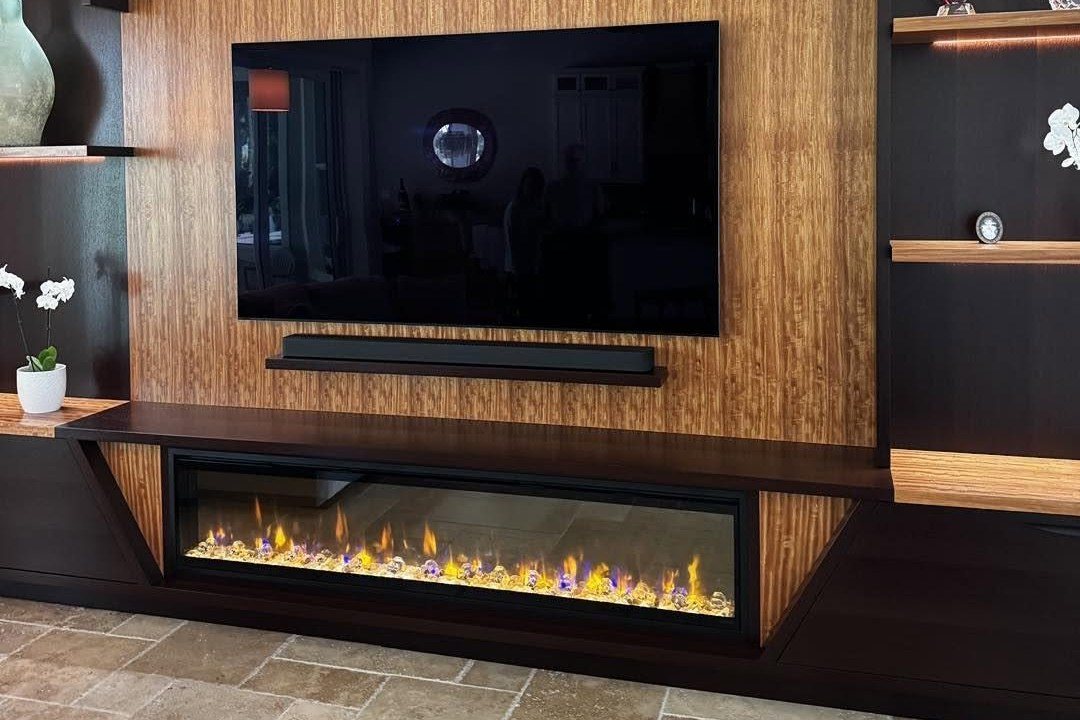
In the electric vs. gas fireplace debate, electric is the better fit for most Florida homes: no venting, flames year-round for pennies an hour and about 5,100 Btu of heat on cool nights. Choose direct-vent gas for a real flame and several times the heat, and wood only if you will keep up with the chimney.
Key takeaways
- Electric costs least per hour: 18 to 21 cents with heat, under 4.5 cents for flames alone.
- Direct-vent gas gives a real flame, roughly three to six times the heat and often works in outages.
- Vent-free gas faces Florida code limits and adds indoor moisture.
- Wood needs a yearly NFPA 211 chimney inspection and dry, termite-safe firewood storage.
In this guide
- Electric vs. gas vs. wood fireplace: the short answer for Florida homes
- How do electric fireplaces work, and why do they fit Florida?
- What does it cost to run an electric fireplace vs. a gas fireplace in Florida?
- Gas fireplaces: direct vent vs. vent-free, natural gas vs. propane
- Wood-burning fireplaces in Florida: what the upkeep looks like
- Can you mount a TV above a fireplace? Media wall planning
- Condos, HOAs, hurricanes and safety: the Florida factors
- Which fireplace should you choose? A quick decision checklist
- Frequently asked questions
Electric vs. gas vs. wood fireplace: the short answer for Florida homes
Northeast Florida has a short, mild heating season, and most families want the look often and real heat only now and then. The best fireplace is the one you will use.
| Feature | Electric | Gas (direct vent) | Wood-burning |
|---|---|---|---|
| What it needs | 120V outlet or hardwired circuit; no vent | Gas line or propane tank plus a sealed vent | Masonry or factory-built chimney |
| Heat output | About 5,100 Btu/h (supplemental) | Typically 20,000+ Btu/h input (Valor L3: 30,484 Btu/h output) | Radiant heat near the fire |
| Cost to run | Heat on: 18 to 21 cents/hr; flames only: under 4.5 cents/hr | 62 to 68 cents/hr at 30,000 Btu/h (natural gas) | Price of seasoned firewood (varies by supplier) |
| Upkeep | Minimal | Annual service | Annual chimney inspection, ash, firewood |
| Power outage | Off without a generator | Many models still heat | Works |
| Condo / HOA fit | Easiest | Needs vent approval | Rarely practical |
How do electric fireplaces work, and why do they fit Florida?
After selling, installing and servicing fireplaces since 1997, our family-run team usually recommends electric first. In the electric fireplaces we sell and install, an LED-lit flame effect pairs with a separate fan-forced heater, and Dimplex says the two operate independently.
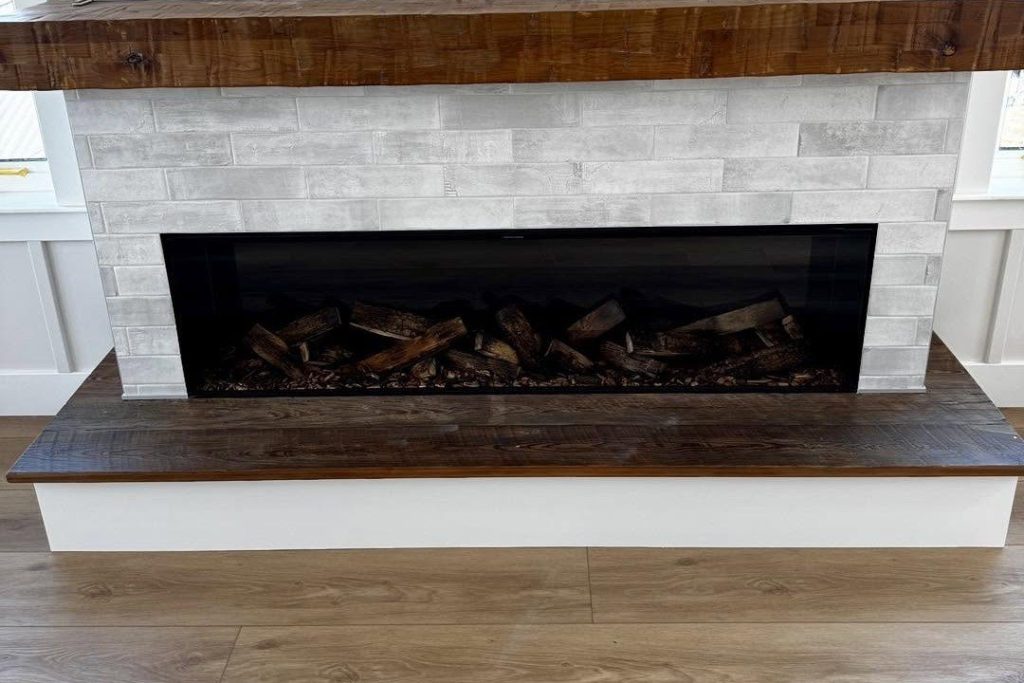
Flame-only mode: the Florida feature
Separate controls mean flames on any mild evening, even with the AC running, and heat only on the nights that call for it. Many models also let you adjust the flame speed, color or ember bed.
We have installed a British Fires electric fireplace in a new home, a Dimplex Evolve and a 74-inch Ignite Evolve feature wall. Electric lines we carry include Dimplex, British Fires, Modern Flames and Valor.
How much heat does a 1,500-watt fireplace make?
A standard 120V unit draws about 1,500 watts with the heater on, or about 5,100 Btu per hour (Dimplex lists 5,115 Btu). Dimplex rates the Ignite Evolve as supplemental heat for up to 1,000 square feet; most gas fireplaces are rated at 20,000 Btu/h of input or more.
Electric takes the chill off a room, not the whole house.
Plug-in, hardwired or built-in?
Many models plug into a standard 120V outlet; others are hardwired, and Dimplex suggests a dedicated 15-amp circuit if lights dim when the unit runs. Leave hardwiring to a licensed electrician, per the manual and local code.
Electric also comes as wall-mount units, built-in linears that recess into the wall, and inserts for an existing firebox. The Ignite Evolve, for example, comes in sizes from 50 to 100 inches.
Where electric is the clear winner
No vent, gas line or chimney means electric fits interior walls, condos, bedrooms and media walls. Nothing burns, so there is no carbon monoxide, and the glass stays cool to the touch.
The trade-offs: a simulated flame, modest heat and no flames or heat in an outage without a generator.

What does it cost to run an electric fireplace vs. a gas fireplace in Florida?
Electric cost: watts / 1,000 x hours x your rate per kWh. Gas: Btu/h input / 100,000 = therms per hour.
FPL’s October 2026 residential rates total about 12.3 cents per kWh for the first 1,000 kWh a month and 14.3 cents above, before the base charge and taxes. On another utility, use the rate on your bill.
Electric: heat on vs. flame only
With the heater on, 1,500 watts costs about 18 to 21 cents an hour. Once the room warms, it cycles: at 50 percent cycling, Dimplex estimates about 8 cents an hour at its own average rate, or roughly 10 to 12 cents at FPL rates.
Flames only, Dimplex rates its effect at slightly under 300 watts: about 4 cents an hour (3.7 to 4.3 cents at FPL rates). Flame draw varies by brand, so check your model’s spec sheet.
Our Valor electric fireplace in St. Augustine shows why this matters: its energy-efficient LED flames can run for ambiance alone, so it gets used year-round.

Flame-only mode costs pennies
Three hours of flames every night for a year: about 329 kWh, or $40 to $47 at FPL rates. Twenty 3-hour evenings with the heater on add about 90 kWh, roughly $11 to $13.
Gas: natural gas vs. propane by the hour
EIA’s Florida residential average, which includes taxes and monthly customer charges, was $21.33 to $23.62 per thousand cubic feet in January and December 2025: about $2.06 to $2.28 per therm at 1,036 Btu per cubic foot. A 30,000 Btu/h fireplace burns 0.3 therm an hour, or 62 to 68 cents.
If you already have gas service, your bill’s per-therm charges are a better guide and may be lower. Per EIA, propane holds 91,452 Btu per gallon, so 30,000 Btu/h burns about 0.33 gallon an hour.
What drives the total cost
Per hour of ambiance, electric is far cheaper. Per unit of heat, natural gas is a bit cheaper: about $3.10 to $3.45 per 100,000 Btu delivered, using the 66.46 percent EnerGuide efficiency of the Valor L3 linear, versus about $3.60 to $4.20 for electric.
For a fireplace used a few dozen nights a year, installation matters more than fuel: venting, gas or propane supply, wiring, framing, finishes and permits.
Gas fireplaces: direct vent vs. vent-free, natural gas vs. propane
Direct vent: the default for most Florida homes
A direct-vent fireplace has a sealed glass front and vents outside through an exterior wall or the roof, usually with a coaxial, pipe-within-a-pipe vent. DOE’s Building America guide says sealed-combustion units take all their combustion air from outdoors and are unaffected by house tightness or exhaust fans.
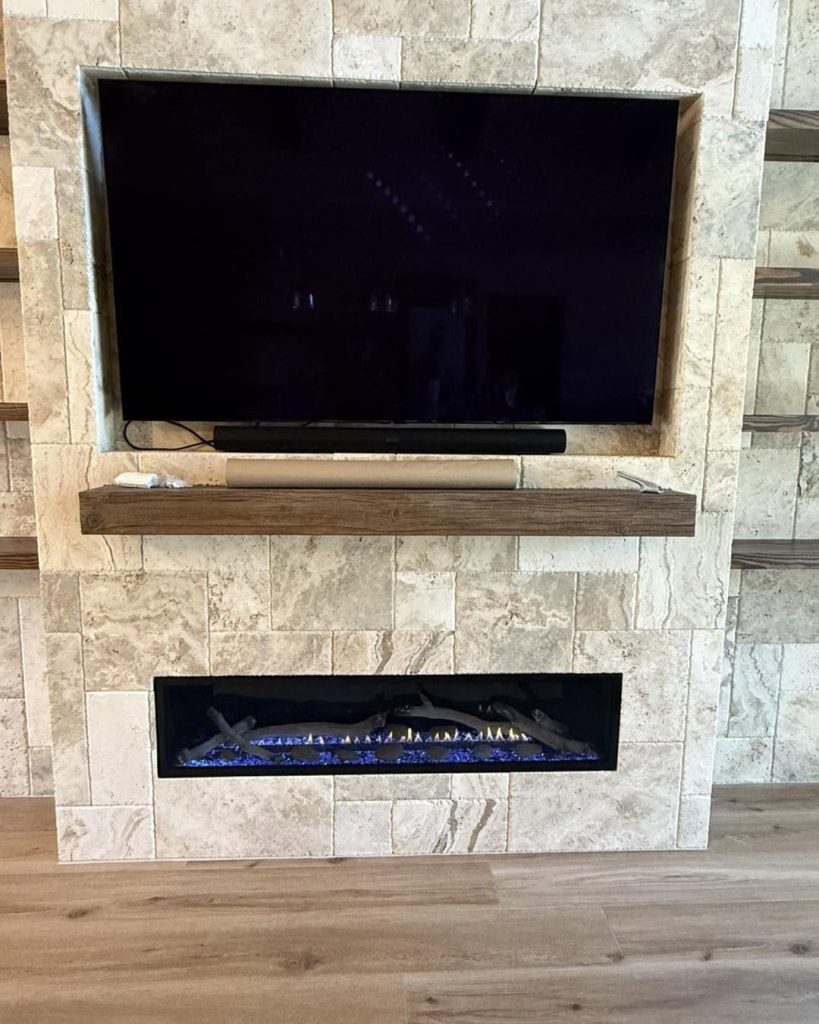
The Florida Building Code, Fuel Gas (Section 303.3) even allows direct-vent appliances in bedrooms when installed per their listing. That is why direct-vent gas fireplaces are our usual gas recommendation, from brands we carry such as Valor, Mendota, Empire Comfort Systems and Napoleon.
Vent-free: mind the code and the humidity
Vent-free units release combustion products into the room, and EPA notes combustion always produces water vapor, which can raise indoor humidity and encourage mold and dust mites. Section 621 of the same code also limits them:
- Never the sole source of comfort heat
- 40,000 Btu/h maximum and 20 Btu/h per cubic foot of room
- An oxygen-depletion shutoff set no lower than 18 percent oxygen
- No bedrooms or bathrooms, except one small wall heater (10,000 or 6,000 Btu/h)
DOE advises choosing a vented model, and so do we.
Natural gas or propane for a gas fireplace?
No natural gas on your street? Valor offers the L3 as the 1800KN (natural gas) or 1800KP (propane), both at 42,000 Btu/h max. Propane comes from an above-ground or buried tank that your supplier fills on site.
Under Florida Statutes s. 527.02, LP gas installers need a state license, so this is not a DIY job.
Will a gas fireplace work when the power goes out?
Often. Valor says its gas fireplaces do not require a main power source to provide heat, though lights and Wi-Fi controls may not work. Many models light with a battery backup or millivolt system, but blowers need house power, so check your manual.
Replace backup batteries before winter. Annual service is also the time to clear spiders or insects nesting in the pilot and burner.
Wood-burning fireplaces in Florida: what the upkeep looks like
Plan on an annual chimney inspection
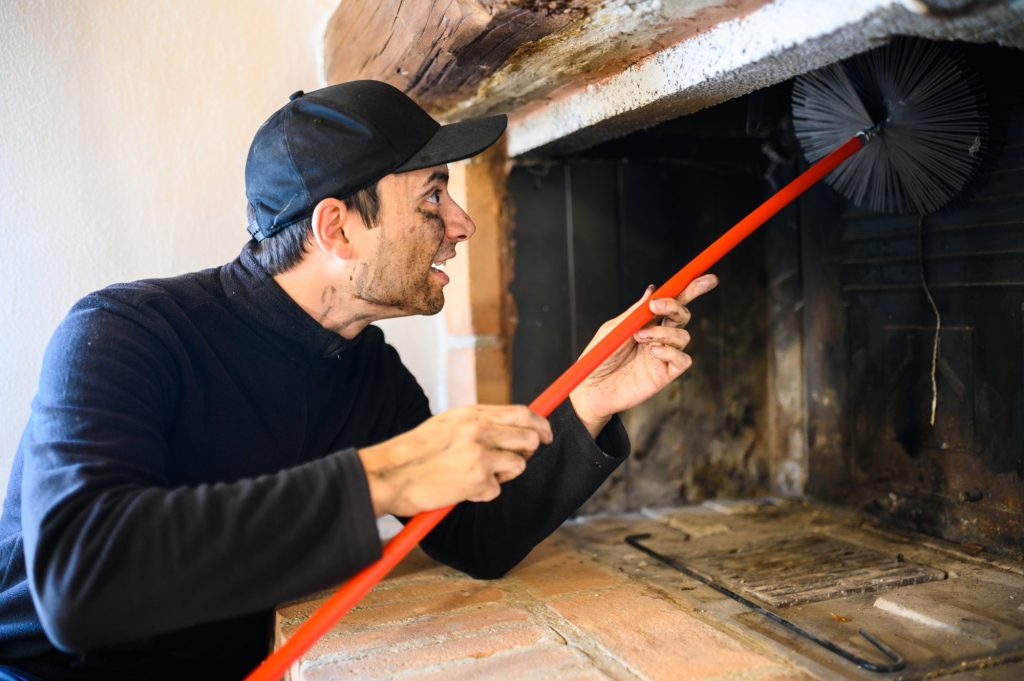
The Chimney Safety Institute of America quotes NFPA 211: chimneys, fireplaces and vents shall be inspected at least once a year, with cleaning and repairs as needed. CSIA adds that this applies even to rarely used fireplaces, since animals nest in flues and masonry deteriorates.
Damper habits for a Florida chimney
Open the damper and make sure the chimney is drafting before you light a fire; close it only after the fire and embers are out. With a cool chimney, DOE warns, even a 50 CFM bath or kitchen fan can backdraft combustion pollutants indoors.
Between fires, a closed damper keeps cooled air in and humid air, insects and critters out. On the coast, have the sweep check the chimney cap for rust.
Firewood, humidity and termites
EPA Burn Wise says wood burns best below 20 percent moisture: season it at least six months, store it off the ground with only the top covered, and test it with a moisture meter. Florida humidity can slow seasoning.
Stack it away from the house to avoid inviting termites, and buy local: Florida law bars most out-of-state firewood.
Electric inserts and gas logs for an old fireplace
Rarely light that old wood-burning fireplace? An electric insert is the simplest conversion: it fits the opening, runs from an outlet or dedicated circuit, and gives flames with or without heat.
Gas logs or a sealed gas insert are the other routes; we carry RH Peterson Real-Fyre gas logs. Either way, have the chimney inspected first and follow the manual for the damper and flue.

Can you mount a TV above a fireplace? Media wall planning
Electric media walls
Electric is the easiest media-wall partner because nothing burns. Dimplex advises checking with the TV manufacturer for restrictions and keeping the fireplace’s minimum clearances; never block the heater outlet.
Our 74-inch Dimplex Ignite Evolve feature wall shows how a large linear electric fireplace anchors a media wall. See more of our fireplace installs.
Gas fireplaces and TVs: manage the heat
Valor explains that heat rises off a gas fireplace and most TVs are rated to only about 100 to 104°F, which the wall above an unmanaged unit can exceed.
A mantel helps a little but will not protect a TV on its own; passive systems such as Valor HeatShift duct heat away without a fan.
Plan it before the drywall goes up
- Fireplace width vs. TV width and viewing height
- A recessed TV niche
- Power, low-voltage conduit and any dedicated circuit
- Vent route and access panel for gas
- Noncombustible surround where the manual requires it
Condos, HOAs, hurricanes and safety: the Florida factors
Condo and HOA rules
Florida Statutes s. 718.113 bars material alterations to condo common elements except as the declaration allows, and a vent through an exterior wall or roof usually alters one.
Get approval first; electric needs no penetration, so it is the usual condo answer. HOAs often review vent caps and propane tanks, too.

Outages, generators and CO alarms
Most storm outages come in hurricane season, June 1 to November 30, when nobody needs a fire. For a winter outage, gas that heats without house power wins.
Run generators outside only, at least 20 feet from the home, CPSC says. Gas and wood fireplaces can make carbon monoxide, so CPSC also recommends CO alarms outside sleeping areas and on every level.
Gas or wood? Add CO alarms
Florida Statutes s. 553.885 requires an approved CO alarm within 10 feet of every room used for sleeping in homes permitted for new construction since July 1, 2008 that have a fireplace or fuel-burning appliance; our fireplace maintenance checklist covers testing them.
Lanais, salt air and outdoor fireplaces
Screened lanais are popular fireplace spots here. Use an outdoor-rated product, like the outdoor-certified Ignite Evolve or a gas unit listed for outdoor installation, and follow its manual’s clearances and local code.
Near the coast, salt air and humidity are hard on outdoor units, so follow the manual on exposure; our outdoor linear gas fireplace was planned with the builder during new construction.
Want a fire outside too? See our guide to choosing a gas fire pit or fire table for a Florida patio; save wood fires for an open yard.
Which fireplace should you choose? A quick decision checklist
- Electric if you want flames most nights and heat on a few, live in a condo, have no gas, or plan a TV wall or bedroom fireplace.
- Direct-vent gas if you want real flame and strong heat in a large room, have gas or will add propane, and want heat in a winter outage.
- Wood if you love the ritual, have a sound chimney, will book the yearly inspection and can store dry wood.
Mistakes we see most often
- Buying without measuring the wall or checking the circuit
- Vent-free gas in a small, humid or sleeping room
- A TV over gas with no heat plan
- Skipping CO alarms or condo and HOA approval
- DIY gas or propane hookups
Still deciding? Request a consultation or call 386-446-5131 to talk through your wall, power and venting.
Frequently asked questions
Is an electric fireplace worth it in Florida?
For most Florida homes, yes. Flame and heater run independently, so you get the look year-round and heat only on cool nights. A 1,500-watt unit adds about 5,100 Btu/h and needs no vent, gas line or chimney, but it stops in a power outage.
How much does it cost to run an electric fireplace?
At FPL’s October 2026 residential rates of about 12.3 to 14.3 cents per kWh, the 1,500-watt heater costs about 18 to 21 cents an hour, less as it cycles. Flames alone use under 300 watts on Dimplex models, or under 4.5 cents an hour.
Is it cheaper to run a gas or electric fireplace?
Per hour, electric is cheaper: about 18 to 21 cents with heat versus roughly 62 to 68 cents for a 30,000 Btu/h gas fireplace, based on EIA’s all-in average Florida gas price for winter 2025. Per unit of heat, natural gas is a bit cheaper.
Does a gas fireplace work when the power goes out?
Many do. Valor says its gas fireplaces need no main power source to heat, and many models light with a battery backup or a millivolt system. Blowers, lights and Wi-Fi need power, so check your manual. Electric fireplaces need power or a generator.
Are vent-free gas fireplaces allowed in Florida?
Yes, with limits under the Florida Building Code, Fuel Gas: never the sole heat source, 40,000 Btu/h maximum, 20 Btu/h per cubic foot of room, an oxygen-depletion shutoff, and no bedrooms or bathrooms except one small wall heater. We usually recommend direct vent.
Can you mount a TV above a fireplace?
Usually, with planning. An electric fireplace burns nothing; Dimplex says to check the TV maker’s restrictions and keep minimum clearances. A gas fireplace sends heat up the wall, and Valor notes most TVs are rated to only about 100 to 104°F, so plan for heat management.
Plan it with a local pro
See electric and gas fireplaces in person at our showroom at 4982 Palm Coast Pkwy NW, Suite 7, in Palm Coast (Monday to Saturday, 9 to 5), or talk with our team about your wall, venting and power. We sell, install and service fireplaces across Flagler, Volusia and St. Johns Counties.
Sources
- Dimplex: Electric fireplace technical support FAQ
- FPL: Residential Rates and Clauses, effective October 2026
- U.S. EIA: Florida price of natural gas delivered to residential consumers
- 2023 Florida Building Code, Fuel Gas, Section 621 (unvented room heaters)
- Florida Statutes s. 553.885: Carbon monoxide alarms
- U.S. CPSC: Carbon Monoxide Information Center